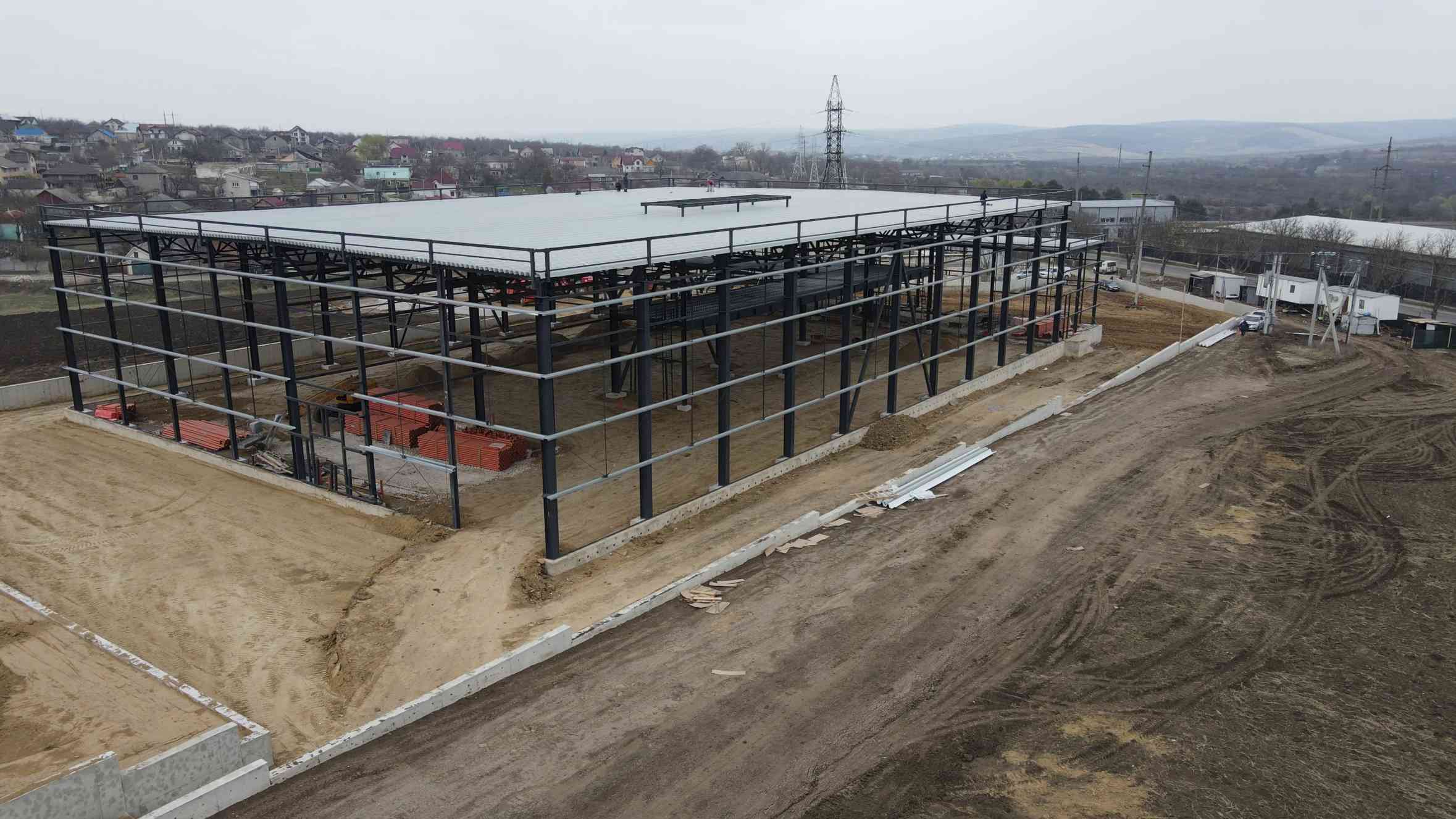
On an industrial construction site, an hour of a crane standing idle costs just as much as an hour of it working. Heavy equipment – mobile cranes, aerial work platforms, loaders, tractor-trailers – accounts for a significant share of construction costs, and the way it is scheduled directly affects deadlines. Equipment management is, in fact, management of the pace of the entire site.
Choosing the Right Crane
A crane is not chosen based on “how much it can lift at most.” The rated capacity refers to the minimum radius, and at longer distances the capacity drops considerably. The real criteria are:
- the weight of the heaviest element and the radius at which it must be installed;
- the required lifting height, including the length of the slings and the spreader beam;
- the space available for positioning the crane and extending the outriggers;
- the bearing capacity of the ground in the work area;
- the number of repositionings needed during erection.
For buildings with large spans, it is sometimes more efficient to preassemble the trusses on the ground and lift them with a larger crane than to work with a small crane and many operations at height.
Aerial Work Platforms – Productivity and Safety
Aerial work platforms and boom lifts are indispensable for bolted connections, installing wall panels and roofing, and finishing work at height. Articulating platforms are useful where obstacles must be worked around, while telescopic ones are suited for great heights and long reaches. The choice between wheeled, tracked, or truck-mounted models depends on ground conditions and the mobility required.
Operators must be trained, and platforms must be technically inspected in accordance with current requirements. Work from the basket is always done wearing a harness anchored to the point designated by the manufacturer.
Oversize Transport
Long beams, trusses, columns, and some process equipment exceed standard vehicle dimensions. Transporting them requires preparation:
- determining the exact dimensions and weights of the load as early as the structural design phase;
- choosing the route, checking bridges, power line heights, turning radii, and weight restrictions;
- obtaining special transport permits, where required, in accordance with the rules in force at the road authorities;
- providing an escort and special signage, as applicable;
- scheduling transport hours to avoid heavy traffic.
An often-overlooked detail: dividing the structure into transportable sections is decided by the designer together with the fabricator. An additional field splice may cost less than a complicated oversize transport.
Scheduling Equipment in the Work Program
Heavy equipment must appear in the construction schedule as separate resources. In practice, this means:
- synchronizing structural steel deliveries with crane availability – elements must arrive exactly in erection order;
- preparing crane pads and access roads in advance;
- avoiding multiple machines with overlapping working radii in the same area;
- building in a buffer for days with strong wind.
Own Fleet or Rental?
Renting is suitable for one-off jobs or highly specialized equipment. For a contractor with a steady volume of work, an in-house fleet offers immediate availability, operators who know the company’s procedures, and independence from rental companies’ schedules. The downside is maintenance cost, which must be offset by high utilization.
Maintenance and Record-Keeping
Each machine must have a clear history: services performed, periodic technical inspections, operating hours, breakdowns, and fuel consumption. Preventive maintenance costs less than a breakdown in the middle of erection, when the entire crew is waiting. Digital record-keeping systems and GPS tracking help monitor actual utilization and identify underused equipment.
A well-scheduled machine works continuously; a poorly scheduled one sits at the site gate waiting for either materials or an available work front.
S.A. COLASS has its own fleet of trucks, cranes, and construction equipment, which allows precise planning of erection without depending on third parties.
Need a partner with its own equipment for your project? Contact us at +373 78 30 40 40.