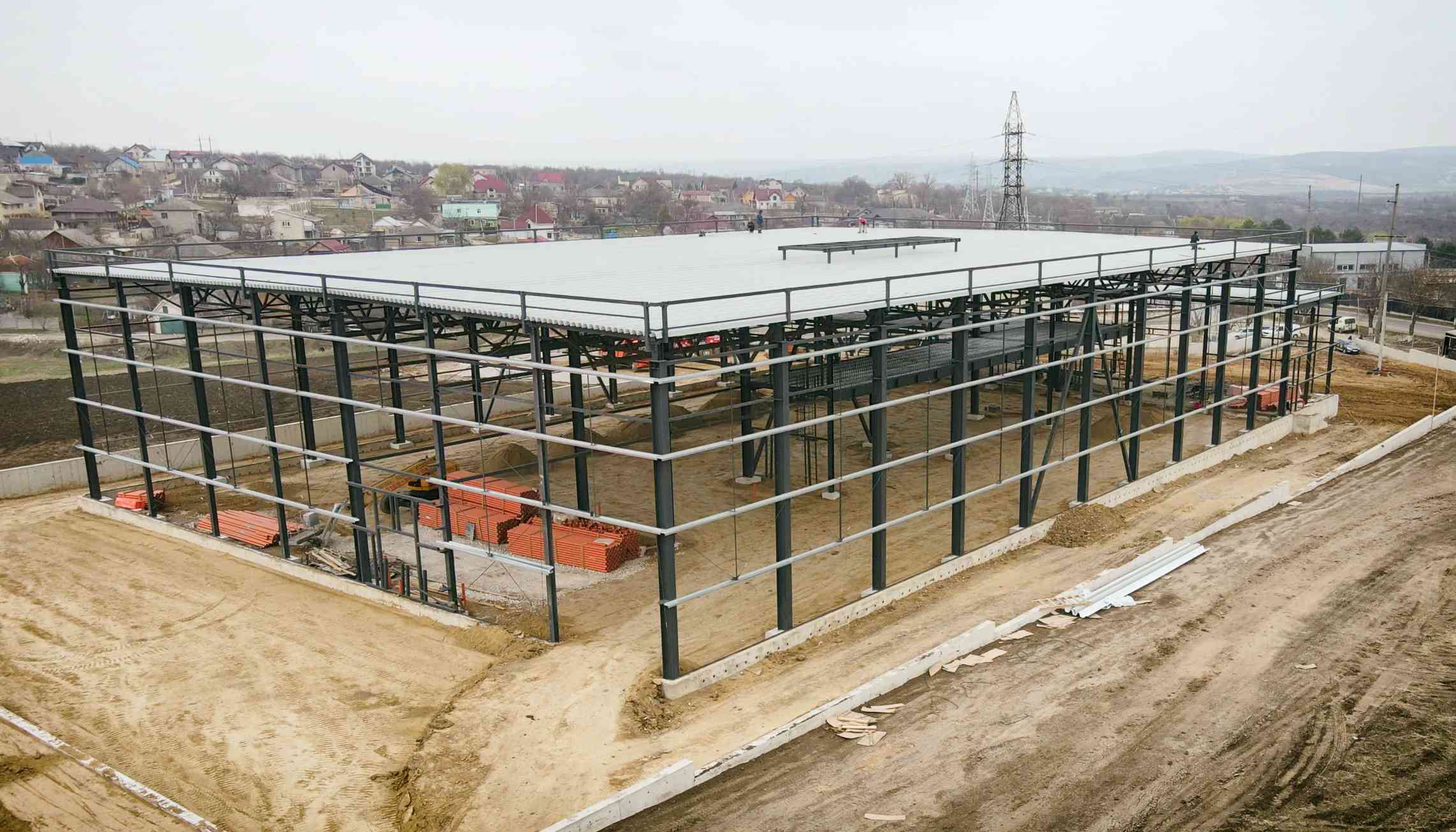
In industrial construction, materials – steel, concrete, sandwich panels, sheet metal, rebar, fasteners – usually make up the largest share of the total cost. Every percent lost to damage, wrong orders, or unrecorded inventory is reflected directly in the budget. Delays are just as costly: an erection crew waiting for a batch of bolts holds up the entire schedule.
Procurement Planning Starts with the Design
Good materials management begins with the bills of quantities taken from the design and the cost estimate. Based on them, a procurement schedule is drawn up that is tied directly to the construction schedule: which material, in what quantity, for which phase, and by what date it must be on site.
It is essential to identify long-lead materials early. Sandwich panels in special colors, steel sections of certain sizes, sectional doors, or process equipment can have production lead times of several weeks. They must be ordered as soon as the design is approved.
Delivery “Just in Time,” Not “As Early as Possible”
The temptation to bring all materials to the site from the start seems safe, but it has drawbacks: occupied space, risk of damage and theft, and tied-up capital. The optimal principle is phased delivery, in the order of use. For structural steel, this means delivery in sections, following the erection sequence, so that elements are unloaded as close as possible to where they will be lifted.
Receiving Materials on Site
With every delivery, the following are checked:
- quantity – against the delivery note and the order;
- quality and conformity – quality certificates, declarations of conformity, markings;
- physical condition – deformation, paint scratches, moisture, damaged packaging;
- match with the design specification – thicknesses, strength classes, colors.
Nonconformities are recorded immediately, with photos, in the delivery documents. Later claims are much harder to support.
Proper Storage
Structural Steel
Elements are placed on timber supports, not directly on the ground, with a slight slope for water runoff. Contact with mud, which damages the corrosion protection, is avoided. Element markings must remain visible for quick identification during erection.
Sandwich Panels and Sheet Metal
These are stored in their original packs, on flat surfaces, protected from sun and moisture. The protective film is removed according to the manufacturer’s recommendations – if left too long in the sun, it becomes hard to peel off.
Cement, Adhesives, and Sensitive Materials
These require covered, dry spaces protected from frost, with shelf-life dates observed.
Small Items
Bolts, nuts, anchors, and accessories are kept in a closed container, sorted by type and size. Missing a few dozen special bolts can halt erection for an entire day.
Tracking and Controlling Consumption
Materials received, used, and remaining must be tracked continuously. Useful practices:
- a single person responsible for the site storeroom, with written or digital records;
- issuing materials against a requisition slip, by crew and by task;
- periodic inventories compared with the standard consumption in the cost estimate;
- analysis of deviations – above-standard consumption points to workmanship errors, excessive waste, or losses.
Reducing Waste
Optimized cutting of sheet metal and sections, ordering panels to exact lengths, reusing formwork, and protecting materials from the weather significantly reduce waste. Metal scrap is collected separately – it has recycling value.
An orderly site is not only safer, but also cheaper: materials are easy to find, they don’t get damaged, and they aren’t ordered twice.
The Advantage of In-House Fabrication
When the contractor fabricates its own steel structures, it can synchronize production with erection and deliver exactly the elements needed on a given day. Colass uses its own fabrication plant and transport fleet to coordinate fabrication, delivery, and erection without unnecessary inventory on site.
Want a project without material-related delays? Talk to us at +373 78 30 40 40.