Why Energy Matters So Much
For a cold storage warehouse or a processing facility, electricity is one of the largest operating expenses, alongside labor. Unlike the initial investment, it is paid every month, for the entire life of the building. That is why decisions made at the design stage – insulation thickness, quality of the joints, choice of equipment – have a much greater financial impact than it seems when the contract is signed.
Where Energy Is Lost
- through the building envelope – walls, roof, and floor, especially through thermal bridges;
- through air infiltration – doors left open, poorly sealed loading docks, faulty joints;
- through product heat – freshly harvested fruit must be cooled quickly, which takes a lot of energy;
- through equipment – inefficient compressors, oversized fans, poorly adjusted defrosting;
- through lighting and other auxiliary loads.
1. The Building Envelope: The Foundation of Efficiency
Insulation is the measure with the longest-lasting effect. Sandwich panels with a polyurethane or PIR core offer low thermal conductivity, and the thickness is chosen according to the interior temperature: moderate thicknesses are used for chilled rooms, and significantly greater ones for freezer rooms. A simple life-cycle cost calculation often shows that a somewhat thicker panel pays for itself through energy savings.
Equally important is how the panels are installed. Thermal bridges at the junction with the floor, at columns, and at the eaves can cancel out a significant part of the benefit of a good panel. The floors of cold rooms are insulated, and at sub-zero temperatures, frost heave protection for the ground is provided.
2. Sealing and Door Logistics
Every time a door opens, warm, moist air comes in, and the system has to remove both the heat and the moisture, which turns into ice on the evaporators. Effective measures:
- high-speed cold storage doors with automatic closing;
- air curtains or PVC strip curtains;
- loading docks with dock seals and dock levelers;
- an anteroom or refrigerated corridor between the loading dock and the rooms;
- organizing loading so that doors stay open as briefly as possible.
3. An Efficient Refrigeration System
Variable-speed compressors, generously sized evaporators, EC fans, and controls that adapt operation to the actual load reduce consumption during holding periods, which account for most of the year. Demand defrosting, rather than defrosting on a fixed schedule, avoids unnecessary consumption. Remote monitoring helps detect deviations quickly.
4. Solar Photovoltaic Panels
The large roofs of agricultural warehouses are well suited to photovoltaic plants. Solar output largely coincides with the hot periods when refrigeration systems work hardest, which increases the share of energy consumed directly on site. A few things to check:
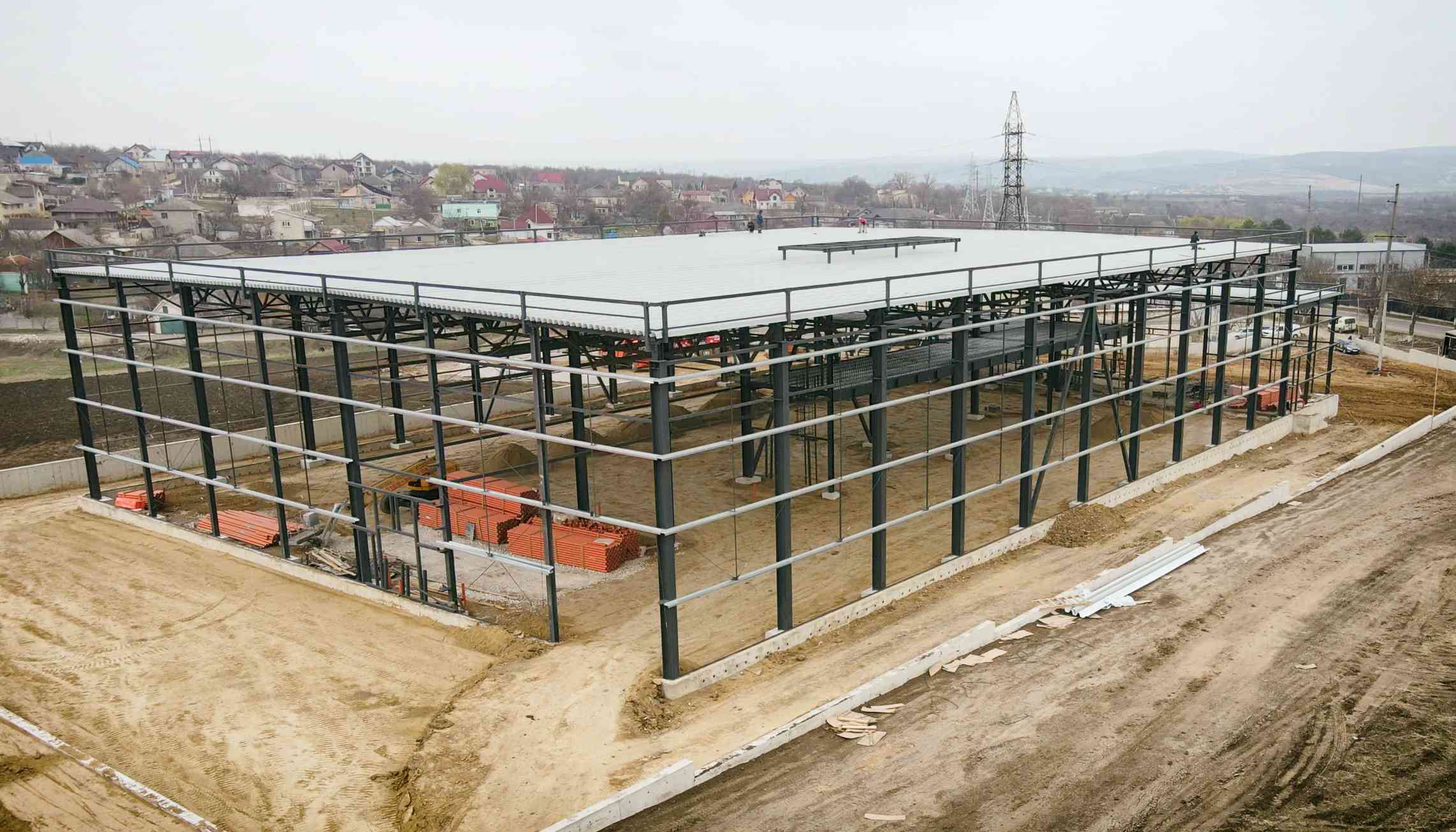
- the load-bearing capacity of the roof – the structure must carry the weight of the panels and the mounting system, plus snow and wind; it is much simpler if this load is accounted for in the design;
- the orientation and shading of the roof;
- the conditions for grid connection and for selling surplus power to the grid, which change periodically – check the current rules with the grid operator and the relevant authorities;
- fire safety and access for maintenance.
5. Heat Recovery
A refrigeration system extracts heat from the rooms and releases it outdoors through condensers. Part of this heat can be recovered to produce domestic and process hot water, to heat locker rooms and offices or sorting areas, or to protect the floor against frost heave. The solution is all the more cost-effective when there is a constant heat consumer near the machine room.
The cheapest energy is the energy you don't use. Only once the envelope and sealing are sorted out does it make sense to invest in generating your own energy.
6. Simple but Useful Measures
- LED lighting with occupancy sensors;
- light-colored roofs, which reduce solar heat gain;
- separate metering of consumption, so you know where the energy goes;
- regular maintenance of condensers and evaporators.
Conclusion
The energy efficiency of an agricultural warehouse is built step by step: a good envelope, sealing, efficient equipment, and then solar power and heat recovery. S.A. COLASS designs the structure and envelope of warehouses with these requirements in mind, including the additional load of a future rooftop photovoltaic plant.
To discuss an energy-efficient warehouse, call +373 78 30 40 40.