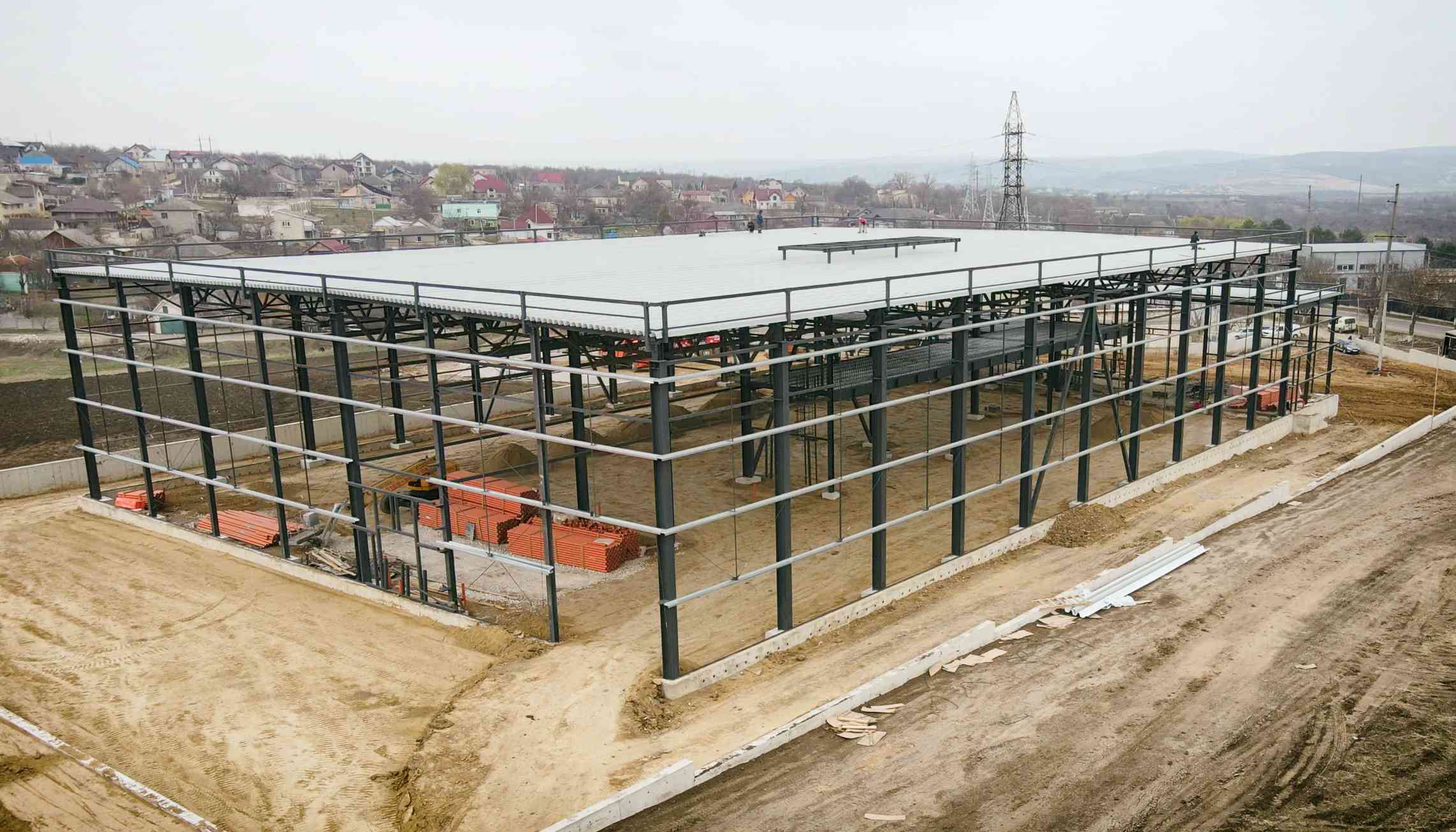
Why there is no universal “price per square meter”
One of the first questions any investor asks is: “How much does a square meter of building cost?” The honest answer is that it depends – and the difference between two buildings of the same floor area can be several-fold. An insulated cold storage building with an overhead crane and a floor designed for high-bay racking cannot be compared to an unheated warehouse for bulk materials. Below are the factors that affect the budget the most.
1. Dimensions and geometry
The span, height and length of the building determine the steel consumption. The larger the clear span, the heavier the frames. Height affects the columns, the bracing and the wall area. On the other hand, larger buildings usually have a lower cost per square meter, because fixed costs – design, site setup, transport, cranes – are spread over a larger area. Simple rectangular shapes are always more economical than those with many setbacks and complicated roofs.
2. Design loads
Snow, wind, any suspended equipment, overhead cranes, rooftop installations or photovoltaic panels increase the sections of the members. An overhead crane, for example, requires runway beams, brackets and stronger columns. It is important for these requirements to be clear from the start: adding them later costs much more.
3. Type of envelope
The walls and roof can account for a significant share of the budget. Plain corrugated sheeting is the cheapest option for unheated warehouses. Sandwich panels add cost, but also thermal insulation; the thickness and type of core – EPS, mineral wool or PIR – change the price significantly. For cold storage facilities, thick PIR panels are a necessary investment.
4. Foundations and soil
Good, level ground allows simple isolated footings. Loess soils, a high water table or large differences in level may require piles, raft foundations or extensive grading. That is why, without a geotechnical survey, any foundation estimate is only approximate.
5. Floor and building services
The industrial floor, electrical networks, lighting, ventilation, heating, refrigeration, fire suppression systems and loading docks can, in some projects, exceed the cost of the structure itself. A common mistake is building the budget solely on the “structure plus envelope” price.
6. Corrosion and fire protection
Galvanizing, multi-coat painting or a duplex system have different costs. Fire-resistance requirements may call for intumescent paints or non-combustible panels, which increase the price.
7. Steel prices and the timing of the purchase
Steel prices on international markets fluctuate, and this is directly reflected in the cost of the structure. Quotes usually have limited validity for precisely this reason.
How to compare quotes properly
- Check what the quote includes – design, foundations, erection, transport, envelope, building services, permits.
- Ask for the steel consumption in kilograms per square meter and the loads used in the calculation.
- Compare the specifications – thickness and type of panels, corrosion protection system, type of doors.
- Beware of quotes far below market – they usually leave out work or use undersized loads.
A building that is 10% cheaper at the quote stage can end up more expensive if it needs strengthening, loses a lot of heat or cannot be extended.
How to reduce cost without sacrificing quality
- Use a regular modular grid with equal bays.
- Choose the span that suits the activity, not “as large as possible”.
- Vary the insulation by zone, according to the actual thermal regime.
- Plan for any future extensions from the start.
S.A. COLASS prepares detailed estimates based on your brief, with the structure fabricated in our own workshop, which eliminates intermediaries. For an indicative quote, call +373 78 30 40 40 or visit us at 8 Uzinelor St., Chișinău.